



The phenomenon of wheezing in centrifuges: causes, effects and analyses
We will discuss a key phenomenon, namely, wheezing, along with its causes and effects, and why centrifuges wheeze. In addition, we will explore centrifuge performance curves and use Aspen HYSYS to analyse compressors for wheezing and blockage conditions.
Understanding Surge in Centrifuges
Centrifuge surge is the inability of a centrifuge to generate sufficient pressure due to a low inlet flow rate. This causes the gas flow to reverse from the outlet side to the suction side, resulting in flow and pressure instability. Surge occurs when the inlet flow rate is below the minimum for effective centrifuge operation.
A variety of factors can cause compressor surge
Sudden equipment shutdown or power failure Utility failure Compressor suction heat exchanger leakage Suction filter obstruction Intercooler fluid or discharge valve failure These are some of the possible causes of compressor surge.
Compressor surge can have a variety of adverse effects.
Unstable flow and pressure conditions, high vibration and noise, resulting in damage to seals, bearings, impellers and shafts Increased sealing clearances, shortened compressor life Reduced energy efficiency Avoiding compressor surge is essential to ensure optimum performance and service life.
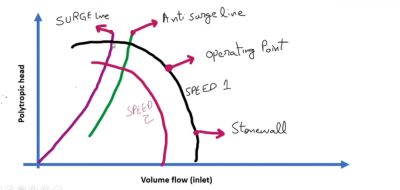
Centrifuge Performance Curves Similar to centrifugal pumps, the performance of centrifuges is described by means of performance curves. These curves are supplied by the compressor supplier and depict the relationship between multi-stage impellers and volumetric flow rate. Different impeller speeds produce different performance curves and operation of the compressor below this curve should be avoided. The anti-surge curve, on the other hand, prevents surge by ensuring that the compressor is operated within safe limits.
The operating zone and the anti-surge curve Centrifuges are normally operated within a range known as the operating zone, which lies between the blockage point and the anti-surge curve. A blocked flow condition or blocked flow condition occurs when the fluid velocity inside the centrifuge reaches the speed of sound and indicates a maximum flow limit. Operation in a blocked flow condition is not recommended.
The anti-surge curve is set approximately 10% above the surge flow rate and varies with compressor speed. Specialised anti-surge systems are designed depending on the type of gas being handled. For example, for handling air, ventilation to atmosphere is appropriate, whereas handling hazardous gases may require a return to the suction side via a hot or cold bypass system.
Analysing Compressor Surge in Aspen HYSYS In order to analyse compressor surge in Aspen HYSYS, two different scenarios will be simulated: a complete blackout and a controlled shutdown. The following steps outline the process:
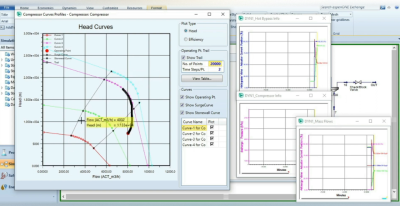
Specify components and fluid packages in the simulation environment, set compressor inlet and outlet conditions. Add compressor performance curves supplied by the supplier and ensure that multivariable efficiencies are selected. Enter flow limiting data, including surge and blockage curves. Activate the required curves and enable simulation. Analyse surge behaviour using a bar chart showing important operating parameters. Evaluate the performance of the anti-surge system under different scenarios to prevent surge and maintain safe operation. By following these steps and analysing the bar graphs, we can understand the state of the centrifuge in the case of complete power failure and controlled shutdown.